Level Up Your Knowledge: The Ultimate Guide to Free Online Learning Tools
Leveling up one’s knowledge in today’s rapidly evolving world is not just a desire but a necessity. The pursuit of continuous learning, whether for professional development, personal enrichment, or career transitions, has become more accessible than ever thanks to the proliferation of free online learning tools. These platforms and resources have democratized education, breaking down traditional barriers such as cost, location, and time constraints. This comprehensive guide will explore the broad spectrum of free online learning, offering insights, recommendations, and strategies to empower anyone eager to expand their intellectual horizons.
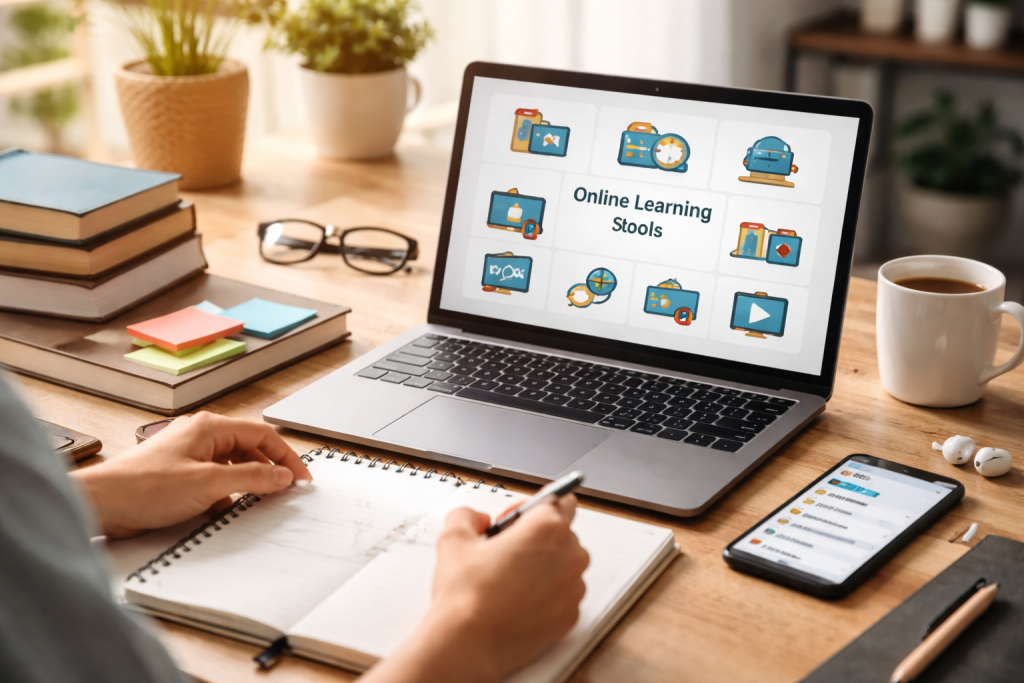
The advantages of embracing free online learning are numerous and profound, impacting individuals on both personal and professional levels. Perhaps the most significant benefit is the unparalleled access to a vast ocean of information and structured learning opportunities that might otherwise be financially prohibitive or geographically out of reach. This accessibility fosters a culture of lifelong learning, essential in dynamic industries where skills rapidly become outdated.
Cost-Effectiveness and Accessibility
Free online learning tools eliminate the financial burden often associated with traditional education. University courses, certifications, and specialized workshops can cost thousands, making them inaccessible to many. Free platforms bridge this gap, offering high-quality content without the price tag. Furthermore, these tools are accessible from virtually anywhere with an internet connection, allowing individuals in remote areas or those with mobility challenges to partake in educational endeavors previously unavailable to them. This democratizes knowledge, ensuring that passion and effort, rather than wealth, become the primary determinants of educational attainment.
Flexibility and Self-Paced Learning
One of the most appealing aspects of free online learning is the inherent flexibility it offers. Learners can set their schedules, studying at times that best suit their lifestyles, whether early mornings, late nights, or during lunch breaks. This self-paced approach empowers individuals to learn at their speed, revisiting complex topics as often as needed without the pressure of a fixed academic calendar. This flexibility is particularly beneficial for working professionals, parents, or anyone juggling multiple responsibilities, making continuous education a manageable and enjoyable pursuit rather than a stressful obligation.
Diverse Skill Development and Exploration
Free online platforms host an incredible array of courses and resources covering virtually every conceivable subject, from coding and data science to creative writing, foreign languages, and even practical life skills. This diversity allows learners to not only deepen their expertise in existing fields but also to explore entirely new areas of interest without commitment or financial risk. This exploratory freedom can lead to unexpected career shifts, new hobbies, or simply a broader, more sophisticated appreciation for the world. It encourages intellectual curiosity and offers a low-stakes environment for experimentation with different disciplines.
The landscape of free online learning is rich and varied, with numerous platforms vying for learners’ attention. While many offer similar features, each tends to have its unique strengths and focuses. Understanding these differentiators can help in selecting the most suitable platform for one’s specific learning goals.
Structured Course Platforms
Platforms like Coursera, edX, and FutureLearn stand out for their partnerships with universities and esteemed institutions, offering free access to audited versions of their courses. While verified certificates usually incur a fee, the actual learning materials, including lectures, readings, and quizzes, are often available for free. These platforms excel in providing a structured learning environment, complete with syllabi and progressive module completion, making them ideal for those seeking a more traditional academic experience without the associated cost. They cover a vast range of subjects from humanities to STEM fields.
Skill-Specific Learning Resources
For those looking to acquire specific, practical skills, platforms like freeCodeCamp and Khan Academy are invaluable. freeCodeCamp, as its name suggests, is entirely focused on coding and offers a comprehensive curriculum to become a full-stack developer, including projects and certifications—all for free. Khan Academy, on the other hand, provides a robust library of lessons and practice exercises across K-12 and early college subjects, particularly strong in mathematics and sciences, making complex topics digestible through clear explanations and interactive practice. YouTube also serves as an enormous repository of tutorial videos on nearly any skill imaginable, from software usage to DIY projects, offering a visual and often quick way to grasp new concepts.
Language Learning Applications
Learning a new language opens up a world of opportunities, and free online tools have revolutionized this domain. Duolingo is perhaps the most well-known, offering gamified lessons in dozens of languages, making the learning process engaging and addictive. Memrise uses flashcards and mnemonic techniques for vocabulary acquisition, often incorporating native speaker videos to aid pronunciation. While not comprehensive enough to achieve fluency alone, these apps provide an excellent foundation and a fun way to practice and build consistent learning habits.
With such a plethora of options, selecting the optimal free online learning tool can feel overwhelming. A thoughtful approach, aligning your personal learning style and objectives with the platform’s offerings, is crucial for a successful and engaging educational journey.
Define Your Learning Goals
Before diving into any platform, clearly articulate what you aim to achieve. Are you looking to upskill for a promotion, explore a new hobby, prepare for an exam, or simply satisfy intellectual curiosity? Specific goals, such as “learn Python for data analysis” or “understand basic photography principles,” will narrow down your choices significantly. Different platforms cater to different types of learning outcomes, so clarity here is paramount.
Consider Your Learning Style
Individuals learn differently. Some thrive with visual aids and video lectures, others prefer reading and text-based materials, while some require hands-on projects and interactive exercises. Review the format of the content offered by various platforms. Do they use videos, interactive quizzes, written articles, or a combination? If you know you struggle with self-discipline, platforms with structured paths and progress tracking might be more beneficial. If you prefer experimentation, platforms rich in practical exercises might be better.
Evaluate Content Quality and Community Support
Even if a resource is free, its value is diminished if the content is outdated, inaccurate, or poorly presented. Look for platforms that are reputable, have positive user reviews, and offer content created by subject matter experts. A strong online community, whether through discussion forums, comment sections, or social media groups tied to the platform, can significantly enhance the learning experience. Peer interaction provides opportunities for clarification, motivation, and sharing insights, transforming a solitary learning experience into a collaborative one.
Embracing free online learning is only the first step. To truly harness its power and ensure effective knowledge acquisition, certain strategies and habits are essential. Passive consumption of content rarely leads to deep understanding; active engagement is key.
Set Realistic Goals and Create a Schedule
While flexibility is a major draw, it can also be a pitfall for those prone to procrastination. Treat your online learning seriously by setting realistic goals for each session or week. Block out dedicated time in your calendar for studying, just as you would for any other important appointment. Consistency, even for short periods, is far more effective than sporadic cramming. Breaking down larger goals into smaller, manageable tasks can also prevent overwhelm and maintain momentum.
Active Engagement and Application
Merely watching videos or reading articles is insufficient for true learning. Actively engage with the material. Take notes, summarize concepts in your own words, and ask questions. More importantly, seek opportunities to apply what you’ve learned. If you’re studying programming, write code. If it’s a language, practice speaking or writing. If it’s a theoretical subject, discuss it with others or try to explain it to someone else. Practical application solidifies knowledge and highlights areas where your understanding might be weak.
Leverage Community and Supplementary Resources
Don’t isolate yourself in your online learning journey. Engage with available communities, whether they are discussion forums embedded in the platform, Reddit subreddits dedicated to specific subjects, or professional networking groups. Asking questions, sharing insights, and helping others can deepen your understanding and provide motivation. Additionally, don’t limit yourself to a single resource. If a topic is unclear or you want a different perspective, seek out supplementary materials like YouTube tutorials, blog posts, or even free e-books. A multi-source approach often leads to a more comprehensive understanding.
The landscape of online learning is continuously evolving, driven by technological advancements and shifting educational paradigms. Several exciting trends are poised to reshape how we acquire knowledge in the coming years.
Artificial Intelligence and Personalized Learning
Artificial Intelligence (AI) is set to revolutionize online learning by offering highly personalized educational experiences. AI algorithms can analyze a learner’s progress, identify strengths and weaknesses, and then dynamically adapt content and exercises to suit their individual needs. This means a truly customized learning path, where the pace and difficulty adjust in real-time, optimizing engagement and ensuring efficient mastery of subjects. AI tutors, capable of answering questions and providing instant feedback, will also become more sophisticated and common, offering 24/7 support.
Virtual and Augmented Reality for Immersive Experiences
Virtual Reality (VR) and Augmented Reality (AR) hold immense potential for creating deeply immersive and experiential learning environments. Imagine conducting virtual lab experiments in chemistry, performing surgical simulations, or exploring historical sites as if you were there. These technologies can transform abstract concepts into tangible experiences, making learning more engaging, memorable, and effective, especially for subjects that benefit from hands-on interaction or visualization. While still in nascent stages for widespread free adoption, the advancement in hardware and content creation will inevitably bring these experiences to more online learners.
Micro-credentialing and Skill-Based Learning
The traditional long-form degree is increasingly being complemented by micro-credentialing and a greater focus on skill-based learning. As industries demand specific competencies rather than broad degrees, online platforms are adapting by offering shorter, highly focused courses that award verifiable badges or certificates for specific skills. This trend aligns perfectly with the agile needs of the modern workforce, allowing individuals to quickly acquire and demonstrate proficiency in in-demand areas without committing to lengthy academic programs. These verifiable digital credentials can then be added to professional profiles, showcasing immediate value to potential employers.
Despite its many advantages, online learning comes with its own set of hurdles. Recognizing and proactively addressing these challenges is essential for a successful educational endeavor.
Maintaining Motivation and Avoiding Procrastination
The freedom and autonomy of online learning can be a double-edged sword, often leading to a struggle with self-discipline. Without the external pressures of a physical classroom or direct instructor oversight, it’s easy to lose momentum or fall into patterns of procrastination. Strategies like setting concrete, achievable goals, breaking down large tasks, scheduling dedicated study blocks, and rewarding small achievements can help maintain motivation. Finding an accountability partner or joining an online study group can also provide external structure and encouragement, making the learning journey less solitary.
Dealing with Information Overload and Distractions
The internet, while a treasure trove of information, is also a cesspool of distractions. When engaging with online learning tools, the temptation to stray to social media, news sites, or other non-educational content is ever-present. Additionally, the sheer volume of available information can lead to analysis paralysis or a feeling of being overwhelmed. Creating a dedicated, distraction-free study environment, utilizing website blockers during study periods, and developing a focused approach to information consumption (e.g., sticking to one course or topic at a time) are crucial. Learning to curate resources and avoid excessive tab-hopping helps in combating information overload.
Technical Glitches and Lack of Direct Support
While online platforms strive for seamless experiences, technical issues can arise, from internet connectivity problems to platform bugs. Unlike a traditional classroom, immediate technical support or one-on-one guidance from an instructor might not be readily available for free online resources. Developing basic troubleshooting skills, utilizing platform help forums, and actively engaging with community support can mitigate these frustrations. For more complex issues, exploring alternative resources or searching for solutions independently often becomes necessary. Patience and persistence are key when technical hiccups occur.
The journey of learning is continuous, and the resources available to support it are vast. Beyond the platforms themselves, there are numerous avenues to explore for enhancing your online learning experience.
Aggregators and Directories of Free Courses
Websites that aggregate free courses from various platforms can be incredibly useful for discovering new learning opportunities. Class Central, for instance, indexes free online courses from universities and providers worldwide, allowing users to filter by subject, institution, and difficulty. Another example is The Open University’s OpenLearn, which offers free courses across a wide range of subjects, often mirroring content from their accredited degrees. These aggregators simplify the search process, helping learners find exactly what they need without sifting through countless individual platform websites.
Online Communities and Forums
Engaging with online communities dedicated to specific subjects or learning in general can provide invaluable support. Reddit has numerous subreddits for almost every discipline imaginable (e.g., r/learnprogramming, r/linguistics), where learners can ask questions, share resources, and connect with peers. Discord servers, professional networking sites like LinkedIn, and even specialized forums can offer a sense of camaraderie, expert insights, and opportunities for collaborative learning that enrich the independent study experience. These communities become essential for discussions, clarifications, and staying updated on new trends.
Free E-books and Digital Libraries
Many universities and organizations offer free access to academic e-books, journals, and research papers. Project Gutenberg provides over 60,000 free e-books, focusing on older works where copyright has expired. Open Educational Resources (OER) initiatives also make vast amounts of educational material freely available, often in the form of textbooks, modules, and multimedia. Exploring digital libraries and openly licensed content provides deep dives into subjects, supplementing course materials and offering diverse perspectives, without the need for expensive purchases. Leveraging these extensive textual resources can significantly broaden one’s knowledge base.